How to Read Calligraphy Sizes: Artwork, Frame, Scroll, and Digital File
Calligraphy listings often include more than one measurement. One number may describe the paper or mounted board, another may describe the outer frame, and a hanging scroll is usually measured from end to end. A digital file has its own page size and resolution. Understanding those differences makes it much easier to choose a format that fits both your wall and your plans.
This guide uses the current options for Yama 山 “Mountain” calligraphy as a practical example. The same reading method is useful whenever you compare framed originals, shikishi boards, scrolls, and printable files.
1. Separate the artwork size from the outer frame size
For framed calligraphy, the smaller measurement normally describes the paper or mounted artwork inside the frame. The larger measurement describes the approximate outside size of the frame. Both matter: the artwork size affects the visual scale of the brushwork, while the frame size tells you how much wall space the finished piece occupies.
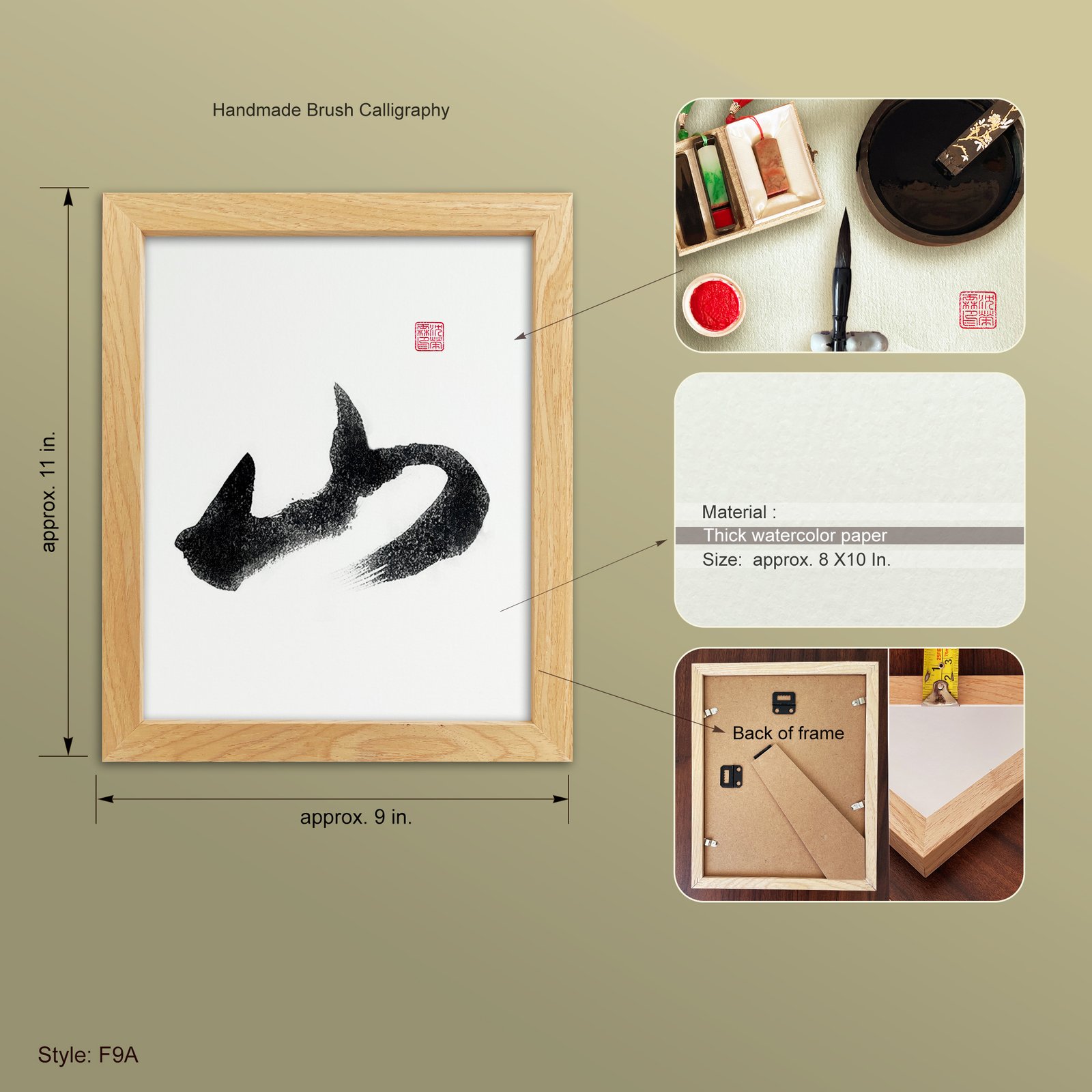
For example, option 9X11A is original black-ink calligraphy on 8×10-inch thick white watercolor paper. It includes an approximately 9×11-inch natural wood frame and arrives ready to hang. If you are measuring a narrow wall section, shelf area, or grouping of frames, use the outer-frame measurement—not only the paper measurement.
2. A shikishi board can include a smaller visual writing area
Shikishi is a mounted rice-paper board. Its listed board size may be larger than the circle or square where the character is visually centered. In the Yama listing, the 11X11 options use an approximately 10×10-inch shikishi board inside an approximately 11×11-inch natural wood frame. The available centers include white or gold circles and white or light-gold squares.
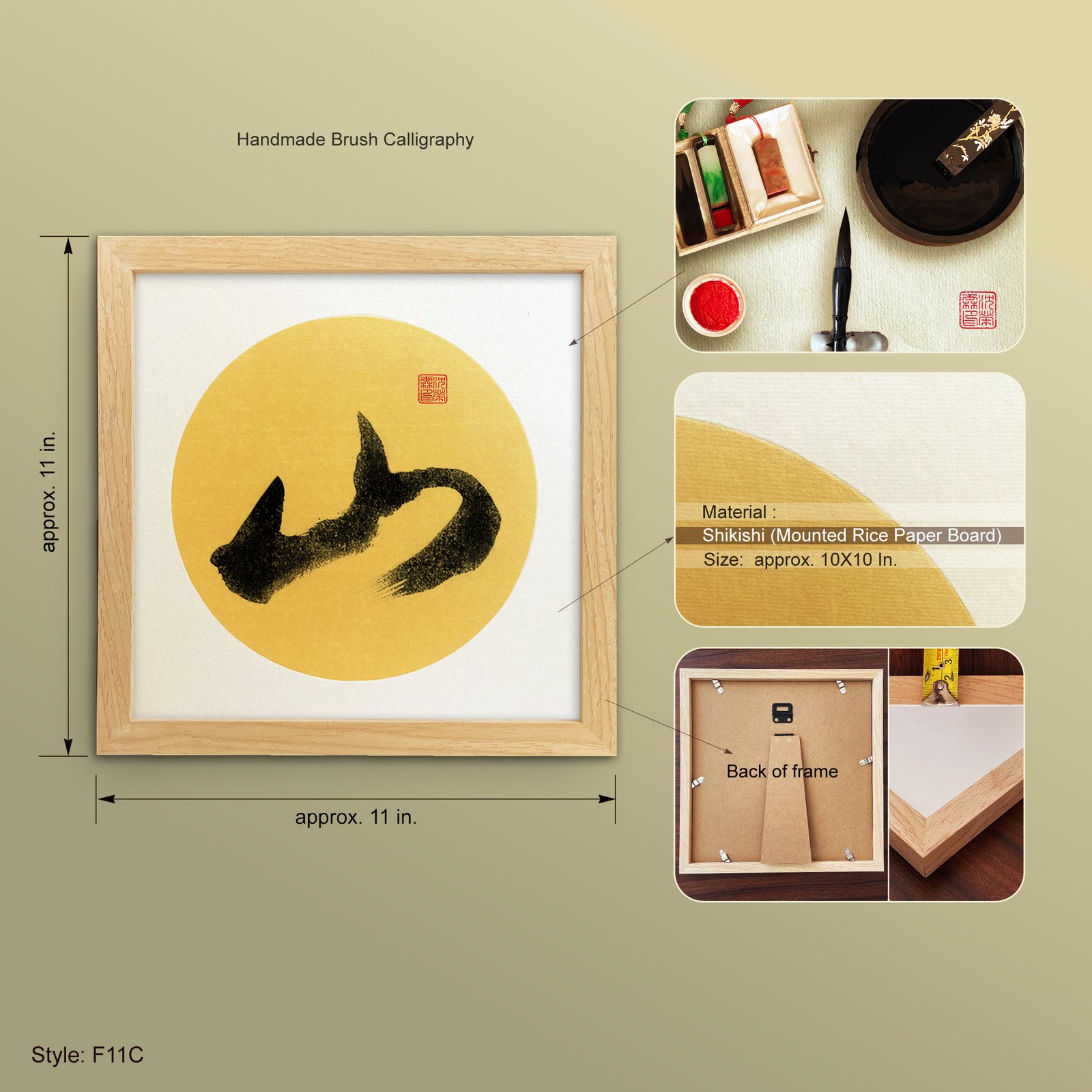
The 14X14 options increase the scale: an approximately 13×13-inch shikishi board is presented in an approximately 14×14-inch natural wood frame. One has a white square writing area and the other has an oatmeal-grey square writing area. When comparing these versions, consider the complete combination of ink color, center shape, board color, and outer frame size rather than relying on the option code alone.
3. A scroll measurement describes the full hanging format
A traditional hanging scroll includes more than the white writing panel. The brocade mounting and rods are part of the finished presentation, so the useful planning measurement is the overall hanging size. The current Yama scroll option is approximately 19×46 inches overall, with black-ink calligraphy on a white panel and a yellow-gold brocade mount.
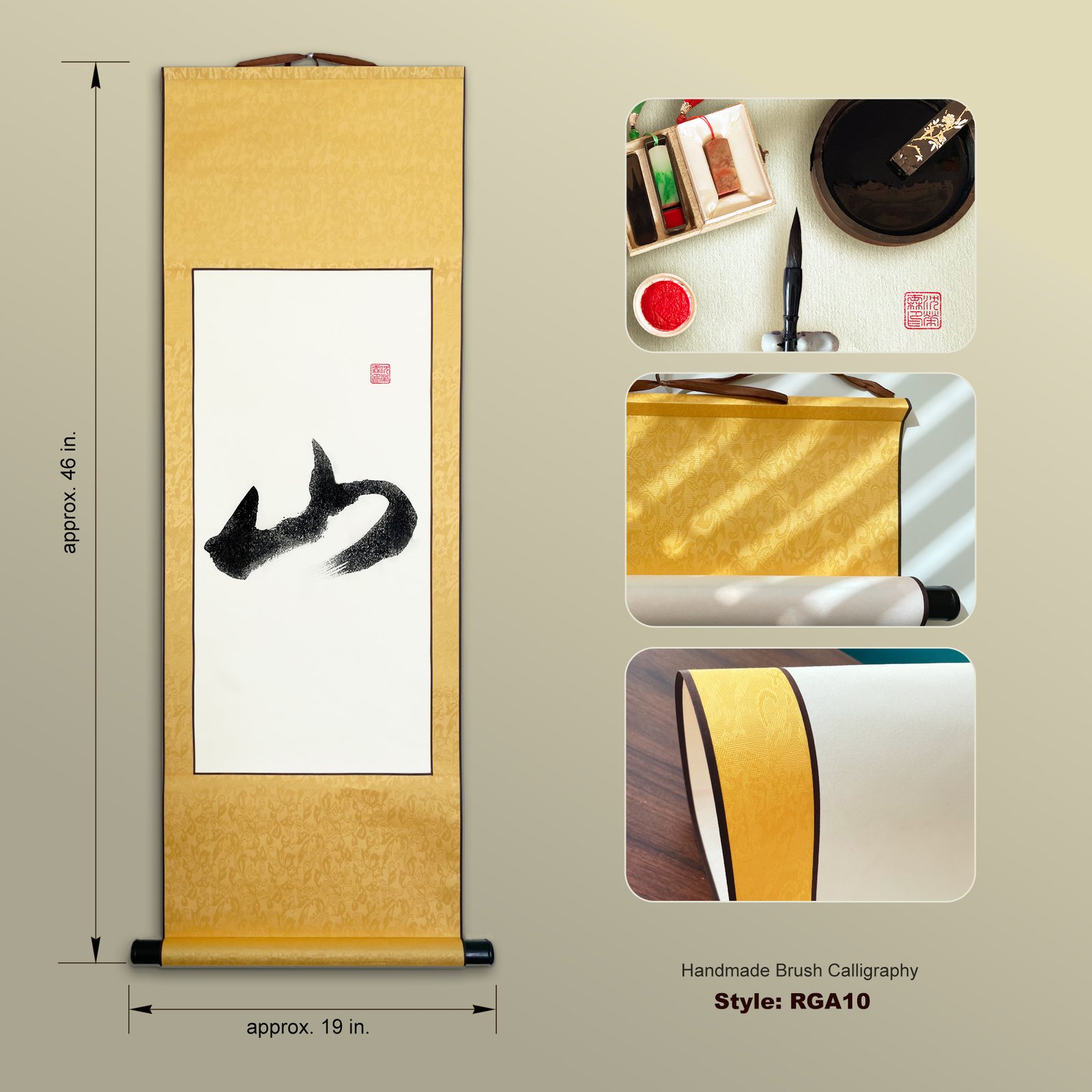
Before choosing a scroll, measure both the available wall width and the vertical drop. Leave some breathing room above and below instead of planning for a fit that is exact to the inch. The scroll version is a physical, made-to-order artwork. Current processing is 2–10 business days before shipping, and tracking is provided after shipment.
4. Digital dimensions describe a file—not a shipped object
A digital option should be read differently. The current Digital File option is one high-resolution PDF at 8.5×11 inches and 300 DPI. It combines scanned original hand-brushed calligraphy with an artist-painted background. It is delivered by email or download link within 1–5 business days. No paper, printed artwork, or frame is shipped.
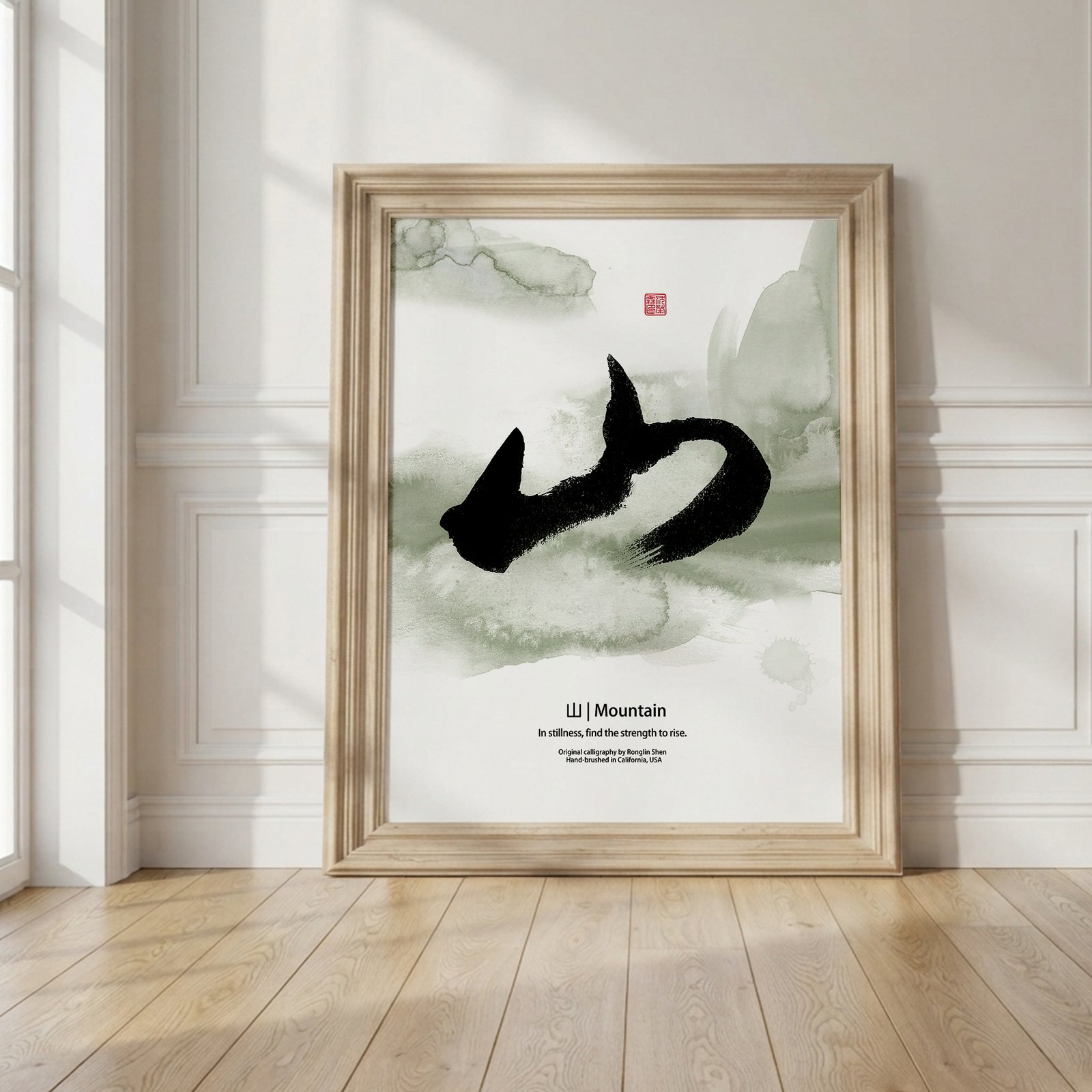
You may print the file yourself at home or through a local print shop. If you need a different word or name, page size, resolution, or format such as JPG or PDF, choose Custom Digital File directly on the product page and provide the requested details with your order. Custom digital files are also delivered electronically within 1–5 business days after the details are received.
A simple size checklist before ordering
- For framed originals: check the paper or board size and the approximate outer frame size.
- For shikishi: note the board size, the shape and color of the writing area, and the frame size.
- For a hanging scroll: plan around the full mounted width and height.
- For a digital file: check page size, resolution, file type, delivery method, and license.
- For customization: choose the Custom Digital File option when you need a different word, name, size, resolution, or format.
The key is to ask what each measurement belongs to. Once you distinguish the artwork surface, the finished outer size, and the digital page dimensions, the option list becomes much clearer—and you can choose a format that works for the space you actually have.